Our Community Potential
by Cathy Larsen, Program Director

Over the past several months, the ELM Foundation hosted True Charity Discussions around two important and connected topics.
In May, “Learned Helplessness” challenged us to consider what happens when people experience repeated setbacks, complicated systems, and assistance that addresses an immediate need but does not create a pathway forward. Over time, people can begin to believe that “My effort doesn’t matter.”The True Charity philosophy of assistance challenges us to move beyond simply meeting immediate needs toward help that preserves dignity, strengthens personal capacity, builds relationships, and creates pathways toward lasting independence. Through our discussion, we identified a system of social service offerings that, despite good intentions, too often reinforces dependency rather than creating a pathway forward.
Part 2, held in August, “Learned Hopefulness,” moves us in the opposite direction. Hope grows when people experience that their choices and efforts can produce change. Every appointment kept, phone call made, decision owned, skill developed, and problem partially solved can become evidence that says, “My effort matters.” But creating that experience cannot be the sole responsibility of one organization.
One Client. Different Agencies. One Path Forward.
Our community is strongest when each agency sees itself as part of a larger path of care. A family may receive food from one organization, utility assistance from another, housing support from another, and intensive case management somewhere else. If those efforts remain disconnected, we see individual transactions—not the family’s journey.
That is why accurate and consistent CharityTracker documentation matters.
Recording assistance indicates which resources our community is providing.
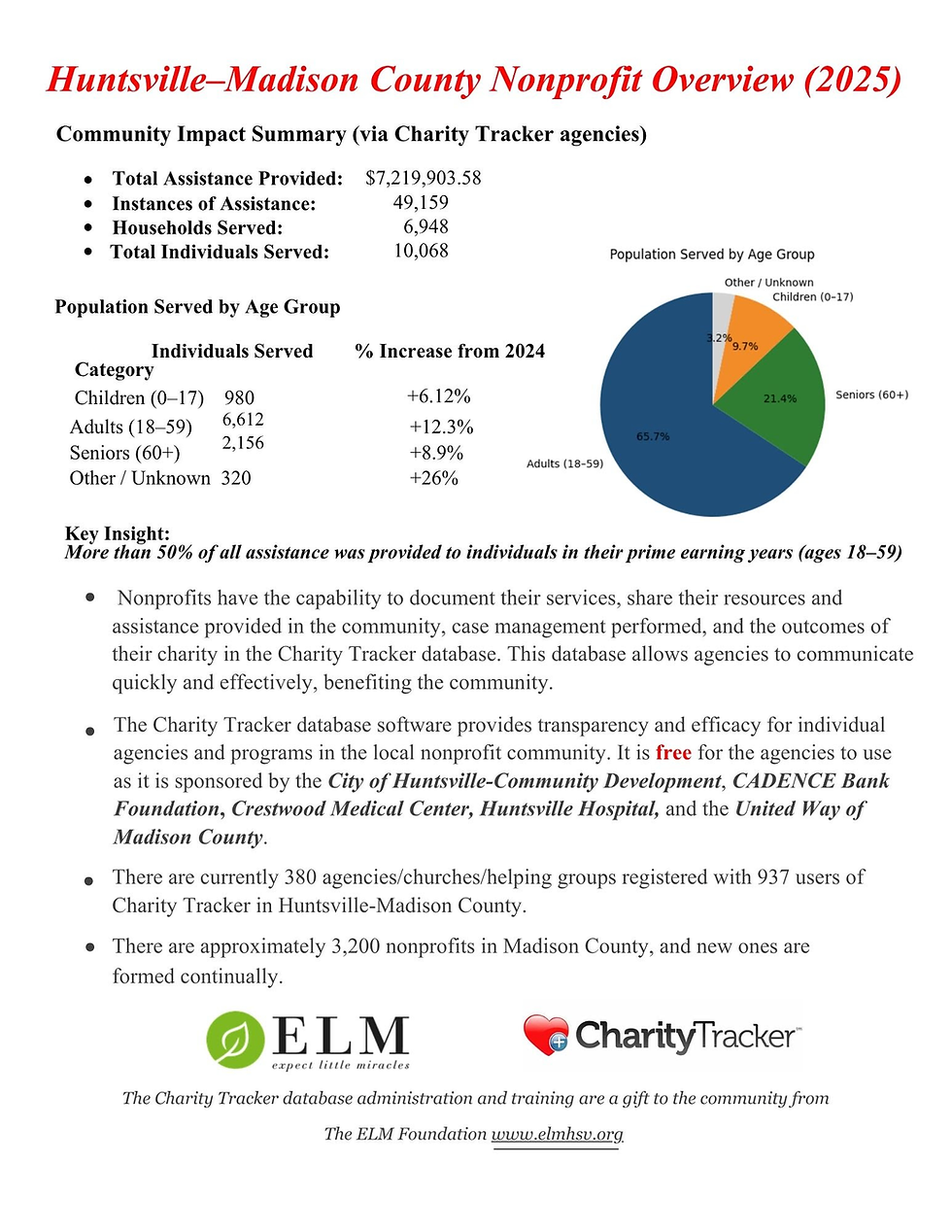
Recording intensive case management, progress, and meaningful outcomes helps us understand what happens beyond the transaction. When an agency cannot meet a specific need, using CharityTracker to send a referral creates a documented warm handoff, allowing both agencies to remain connected and informed as services are provided, progress is made, and data is recorded. When agencies consistently document their work, CharityTracker becomes more than a database—it provides a shared picture of community needs, investment, engagement, and progress.
This transparency helps us identify gaps, reduce unnecessary duplication, improve handoffs, understand where resources are being invested, and—most importantly—see whether our collective efforts are helping people move toward greater stability and independence.
Collaboration Means We Stop Making People Start Over
Learned Hopefulness requires predictability: clear next steps, consistent expectations, reliable relationships, and warm handoffs. When one organization can build on the work of another, clients do not have to continually retell their story or start over at every agency door.
Our goal should be simple:
Regardless of which door someone enters, they encounter a single connected community and a single path forward.
Every assistance record matters. Every case-management interaction matters. Every outcome matters. When we consistently capture those efforts in CharityTracker, we create the transparent community picture necessary to move beyond counting services toward understanding impact.
Together, we can make our data tell the complete story—not simply how much help we provided, but whether our community helped people discover that change is possible.
If your church or agency would like to join our Huntsville/Madison County CharityTracker network or learn more about the helpful resources offered by the True Charity Initiative, contact Cathy@elmhsv.org.